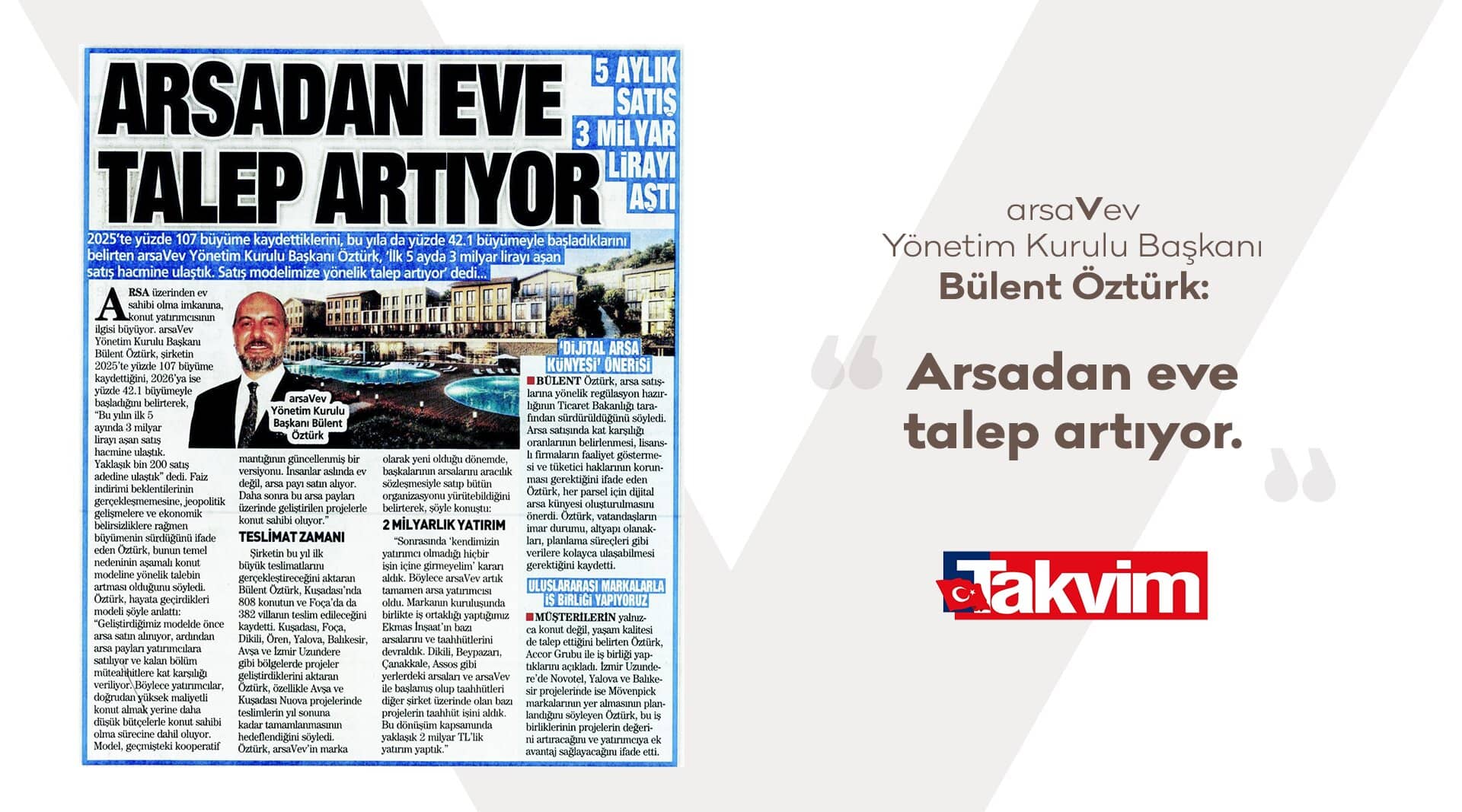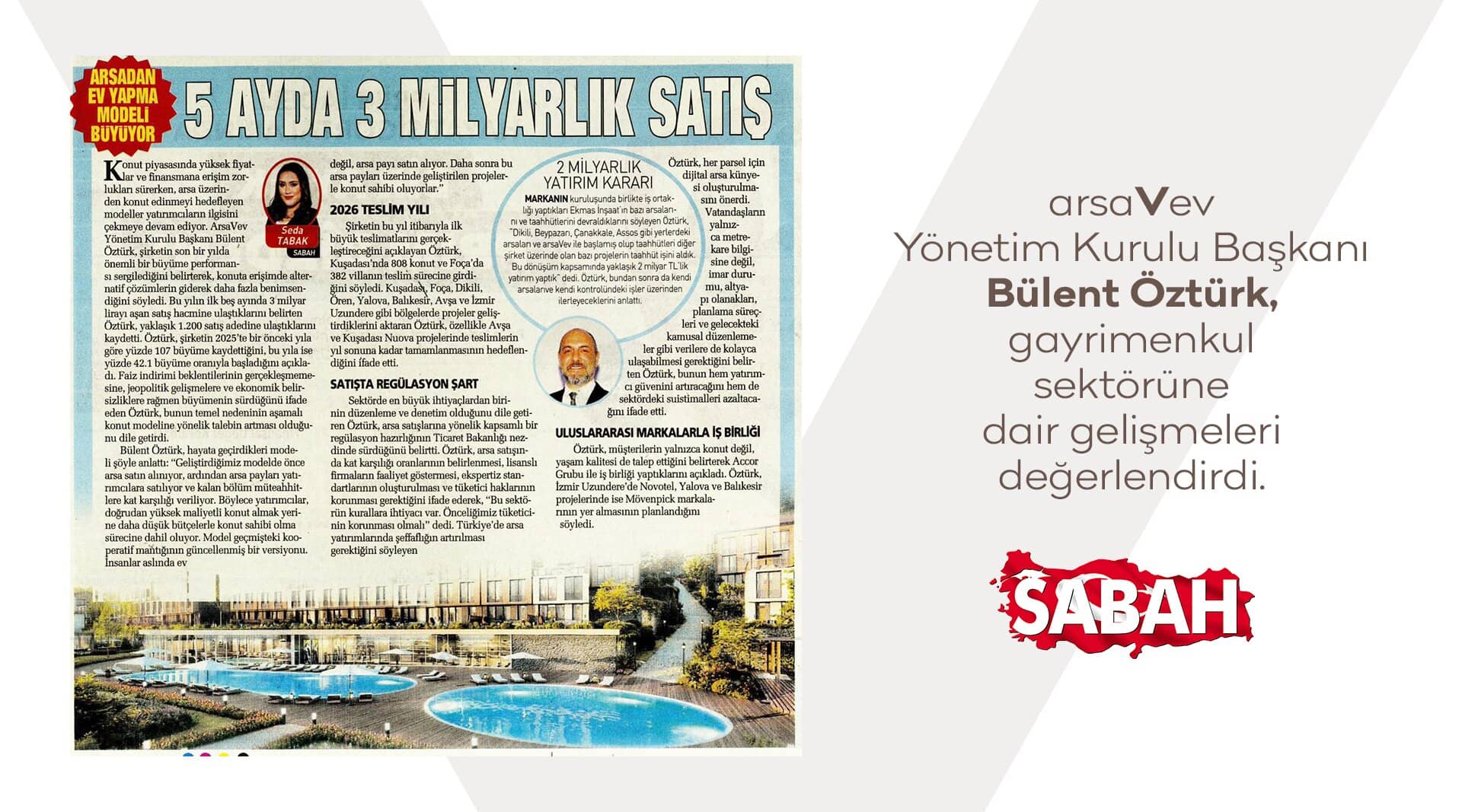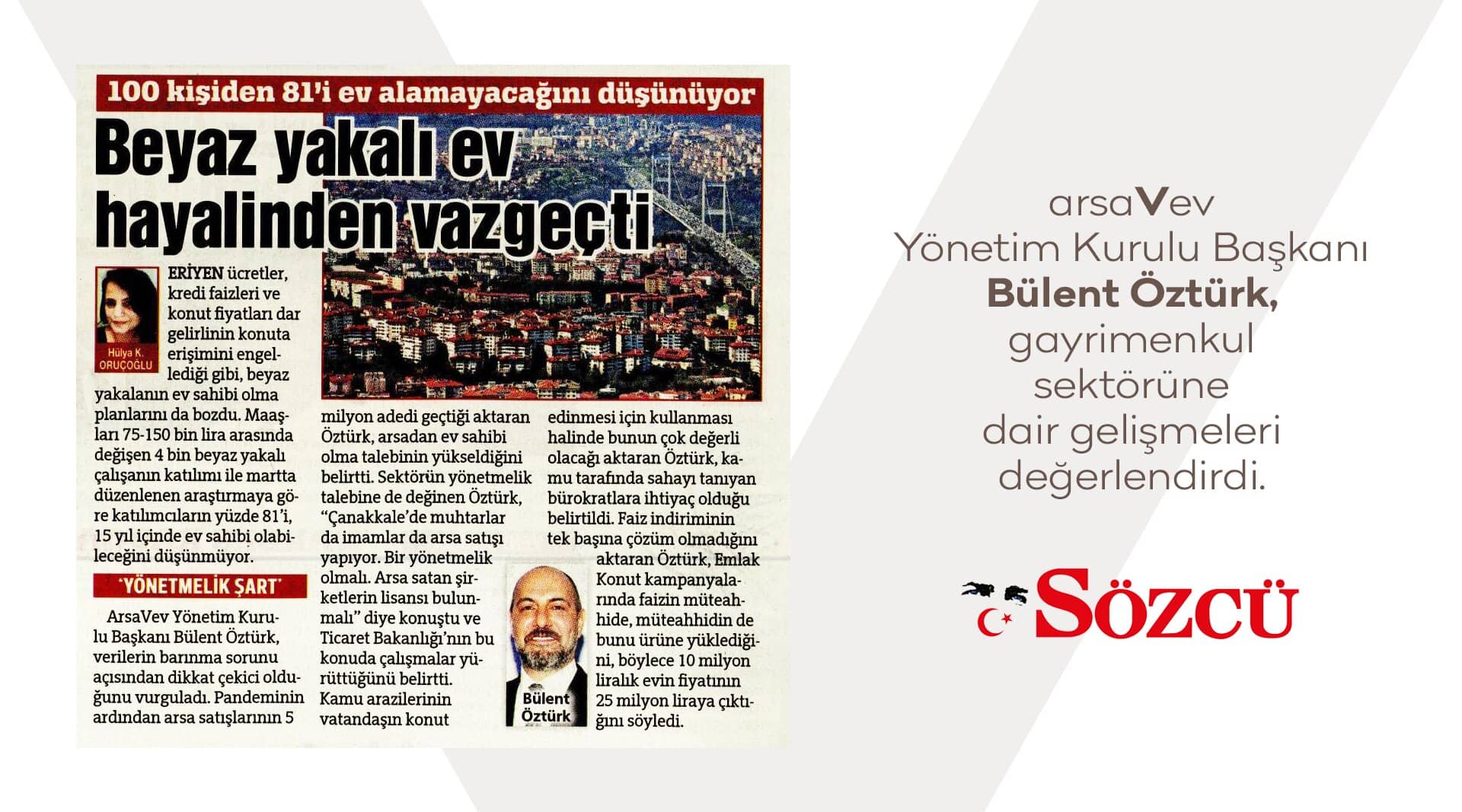
arsaVev Chairman of the Board Bülent Öztürk: “We will not be involved in business where we do not hold the ownership and capital.”
14.10.2026
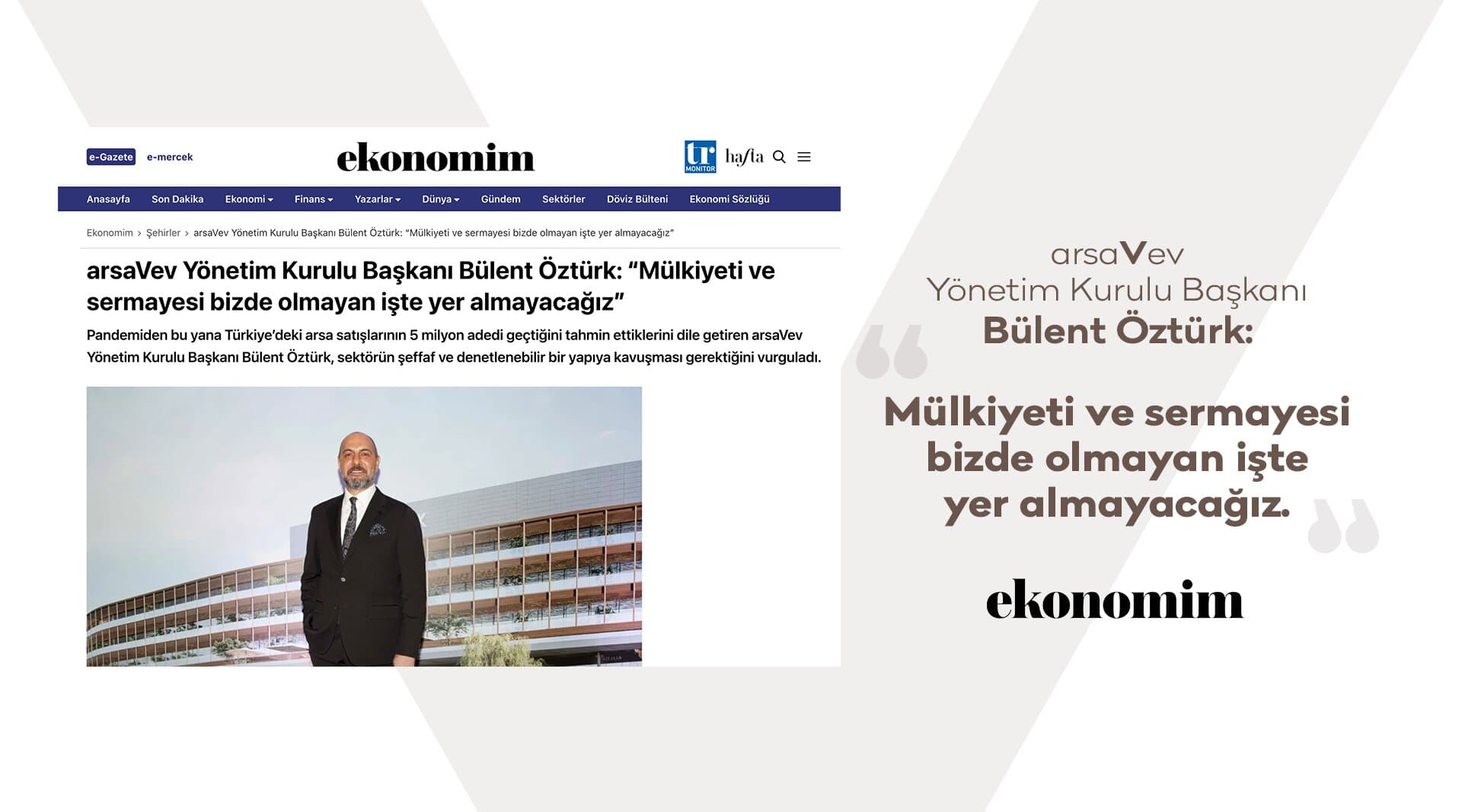
Stating that they estimate land sales in Turkey have exceeded 5 million units since the pandemic, arsaVev Chairman of the Board Bülent Öztürk emphasized that the sector must achieve a transparent and auditable structure.
arsaVev Chairman of the Board Bülent Öztürk announced arsaVev's new investment strategy, the phased housing model, and its projects in the Aegean Region—stretching from Foça to Dikili, Uzundere to Kuşadası and Ören—at a meeting held in Izmir. Stating that the brand will henceforth only participate in business where it directly assumes ownership, investment, and project responsibility, Öztürk said, "If we make a promise to our customers under the arsaVev brand, that promise must be backed by arsaVev’s ownership, capital, and corporate responsibility."
Emphasizing that the most important transformation for arsaVev is the strengthening of its investor identity, Öztürk said, “During our establishment period, we conducted sales and project organizations for some projects without being the property owner. However, as our brand grew, so did our responsibility to our customers. For this reason, we decided not to take part in any project where we are not the investor. Today, arsaVev is a brand that purchases its own land, puts forward its own capital, and assumes project responsibility.”
Stating that within the scope of the new strategy, they have purchased the lands of projects owned by Ekmas and marketed by arsaVev, Öztürk said, “We have taken over the responsibility for the works sold by arsaVev but whose project commitments were held by Ekmas. We have gathered the relevant lands and commitments, particularly in Dikili, Beypazarı, Çanakkale, and Assos, under the arsaVev umbrella with an investment of approximately 2 billion TL. This is not just a land acquisition process; it is a decision to bring the promises we made to our customers under our own ownership, capital, and corporate responsibility. We will continue our future growth only with projects under our own investment and control.”
“An alternative housing model for the middle-income group”
Pointing out that the gap between housing prices and incomes has widened, Öztürk stated that according to their research, 81 percent of white-collar workers with a monthly income between 75,000 TL and 150,000 TL do not believe they can become homeowners through traditional methods within the next 10-15 years. He added, “We do not sell a finished house directly to our customer. First, we make our customer a landowner, and then we give the remaining part of the land to a contractor in exchange for a flat, while ensuring the sustainability of the project. At the end of the process, our customer owns the residence corresponding to their share of the land. arsaVev grew by 107 percent in 2025 and by approximately 40 percent as of June 2026. This performance shows that the model has found resonance in society.”
Expressing that they estimate land sales in Turkey have exceeded 5 million units since the pandemic, Öztürk said, “The sector needs to achieve a transparent and auditable structure. The technical competencies and ownership structures of companies selling land should be audited; contractors should be licensed, projects should be insured, and land-for-flat ratios should be determined by licensed appraisal companies.”
“The housing problem cannot be solved only by interest rate cuts”
Stating that they contact approximately 400,000 customers annually and conduct nearly 1,200,000 meetings, Öztürk said they analyze a wide data set ranging from preferred regions to accessible price levels and living space expectations. Öztürk said, “We develop our new projects based on concrete data, not estimates. People now want projects with high social areas, service quality, and living standards, not just housing.”
Öztürk also stated that the housing problem in Turkey cannot be solved only through interest rate cuts, and that utilizing public lands with cost-based or phased housing models could be an important solution.